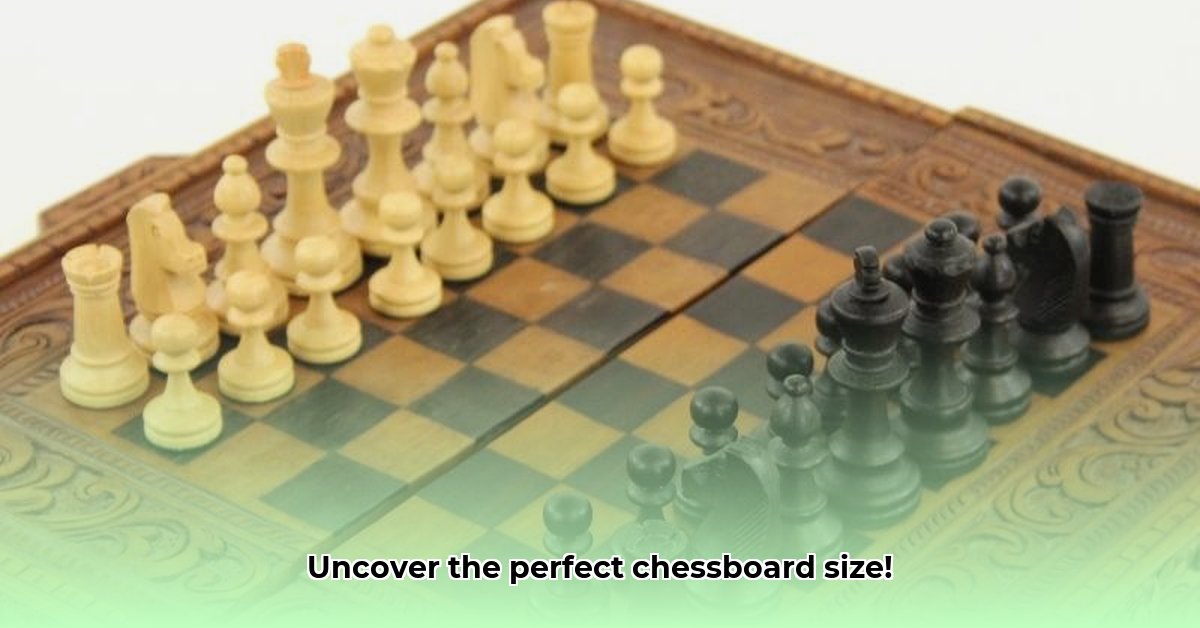
Choosing the right chess set can feel like navigating a minefield, especially when it comes to finding the perfect balance between board and pieces. This comprehensive guide will help you find that perfect fit, whether you’re a seasoned grandmaster or a budding enthusiast. We’ll provide clear, step-by-step instructions on measuring your board and pieces, calculating ideal ratios, and avoiding those frustrating sizing mismatches. Let’s get started!
Decoding Chess Set Sizes: More Than Just Black and White
Manufacturers often use a vague “size” system (e.g., size 4, size 5). This usually refers to the size of each square on the board – what we’ll call the “field size”. Larger numbers generally mean larger boards and pieces, but there’s significant variation. A size 4 board might have squares ranging from 40mm to 47mm! This lack of standardization can be confusing. Isn't it frustrating trying to find the perfect fit?
The King: Your Guide to Chessboard Dimensions
The king piece often determines the overall set's size. Its base diameter is crucial. Generally, it should measure between 72% and 82% of the field size (the side length of one square). This ratio provides a good starting point for consistent sizing.
For example, a board with 50mm squares should have a king with a base diameter between 36mm and 41mm. Did you know this simple ratio can make all the difference?
Pawns: A Matter of Personal Preference
Pawn sizing is more subjective. Some prefer a ratio where the pawn's base diameter is about 50% of a field size (allowing four pawns across a square). Others find the ideal ratio closer to 58.6% (allowing two pawns to fit diagonally across a square). This is a matter of visual preference. What looks aesthetically pleasing to you?
Finding the Perfect Set: A Step-by-Step Guide
Follow these steps to ensure your next chess set is a perfect match:
Decide on Your Desired Board Size: Do you need a compact travel set or a large board for serious games? Consider your playing space and needs. This is an important first step for satisfying your needs.
Look for Precise Measurements: Always check for the exact field size (in millimeters) of the board. Don't rely on vague size classifications. Remember, precision is key!
Calculate King and Pawn Sizes: Use the ratios discussed above to calculate the ideal king and pawn sizes based on the field size. This ensures harmonious proportions.
Compare Your Calculations: Match your calculated sizes to the manufacturer's specifications. This simple check prevents disappointments.
Visualize the Set: When possible, view photos or 3D models online to ensure the proportions look pleasing to your eye. Visual confirmation is crucial, wouldn't you agree?
Common Pitfalls and Solutions
Vague Online Descriptions: Many online sellers provide insufficient detail. Contact the seller directly for clarification if needed. Always check the details, to avoid unnecessary hassle!
Inaccurate Measurements: Double-check measurements using a ruler if unsure. Precise measurement is fundamental for a harmonious chess set.
Common Chess Set Sizes and Ratios (Approximate)
This table provides approximate sizes and ratios. Always verify with the manufacturer's specifications.
| Set Size | Approximate Field Size (mm) | Approximate King Base Diameter (mm) | Pawn Base Diameter (50%) (mm) | Pawn Base Diameter (58.6%) (mm) |
|---|---|---|---|---|
| Size 4 | 40-47 | 29-39 | 20-23.5 | 23.5-27.5 |
| Size 5 | 50-57 | 36-47 | 25-28.5 | 29.3-33.4 |
| Size 6 | 60-67 | 43-55 | 30-33.5 | 35.1-39.2 |
(These are estimates. Always check manufacturer specs.)
By following this guide, you'll be equipped to find the perfect chess set, ensuring a satisfying and visually pleasing game experience. Happy gaming!